

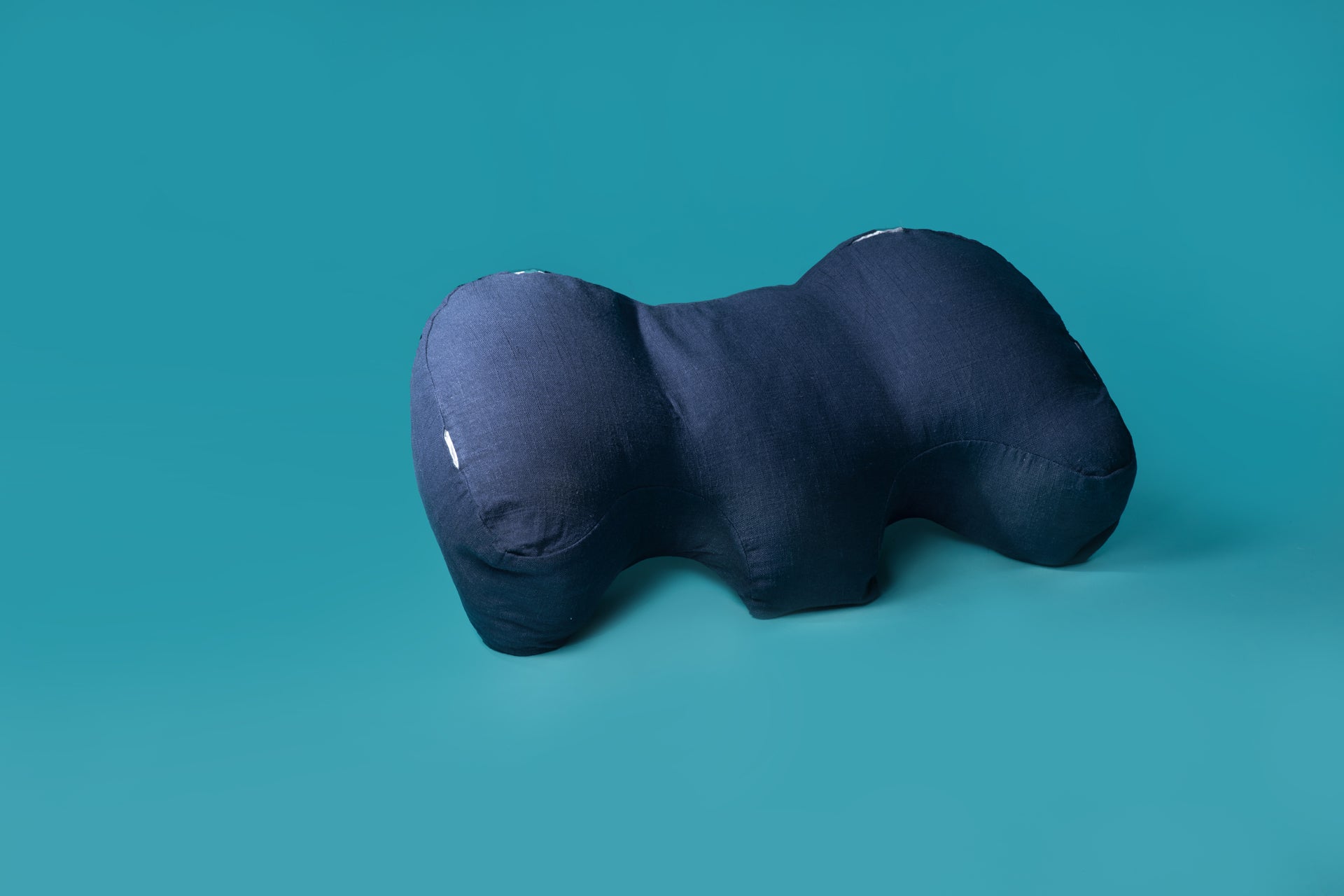
The ROI of Sleep: How an Ergonomic Pillow Reduces Pain and Increases Productivity
Sleep quality is often discussed in terms of comfort or health, but its economic impact is just as significant. Research across sleep science, workplace health, and health economics consistently shows that poor sleep is associated with reduced productivity, higher absenteeism, and increased healthcare costs.
This article explores the return on investment (ROI) of sleep, focusing on how ergonomic pillow support can reduce mechanical strain during rest and support better daily performance—without making medical or treatment claims.
Quick Explanation: Sleep, Pain & Productivity
How does poor sleep affect productivity?
Poor sleep quality is associated with reduced concentration, slower reaction times, increased fatigue, and lower work output. Even moderate sleep disruption can impair cognitive and physical performance the following day.
What role does discomfort play in sleep quality?
Sleep discomfort—such as neck or shoulder strain—can fragment sleep by increasing micro-awakenings. These disruptions reduce restorative sleep stages, which are critical for mental clarity and physical recovery.
Can better sleep support improve daily performance?
Sleep science suggests that reducing physical discomfort during sleep may support longer, more continuous rest, which is linked to improved alertness, focus, and daytime functioning.
The Economic Cost of Poor Sleep
Large-scale studies in occupational health economics estimate that sleep deprivation and sleep disruption cost economies billions annually through:
- Reduced workplace productivity
- Increased error rates
- Higher healthcare utilisation
- Absenteeism and presenteeism
From an economic standpoint, sleep is not just a personal wellness issue—it is a performance variable.
How Pain and Discomfort Disrupt Sleep Architecture
Sleep science identifies several stages of sleep, including deep (slow-wave) sleep and REM sleep, which are essential for:
- Cognitive processing
- Memory consolidation
- Physical recovery
When physical discomfort is present:
- Sleep becomes more fragmented
- The body shifts position more frequently
- Time spent in restorative sleep stages may be reduced
Mechanical discomfort does not need to cause waking pain to disrupt sleep quality—it only needs to interfere with sustained relaxation.
The Role of Ergonomic Support During Sleep
An ergonomic pillow is designed to support head and neck alignment during rest, helping reduce unnecessary mechanical strain caused by poor posture.
From a biomechanical perspective, proper support aims to:
- Maintain neutral neck alignment
- Reduce compensatory muscle tension
- Minimise pressure points during prolonged rest
This alignment-focused approach supports comfort during sleep, which may help reduce sleep fragmentation caused by discomfort.
Sleep Quality as a Productivity Multiplier
Multiple studies in sleep science and workplace performance show correlations between:
- Better sleep continuity → improved focus
- Reduced fatigue → higher task efficiency
- Improved rest → lower perceived discomfort
In economic terms, sleep acts as a multiplier: small improvements in sleep quality can yield disproportionate gains in daily performance and energy levels.
Why Pillow Design Matters More Than Duration Alone
Many people focus on sleep duration, but sleep quality is equally important. Eight hours of disrupted sleep does not deliver the same cognitive and physical benefits as fewer hours of uninterrupted rest.
Regular pillows may:
- Compress overnight
- Lose structural support
- Allow gradual misalignment
Ergonomic designs prioritise consistency, helping the body remain relaxed for longer periods.
Customisation and Long-Term Value
Not all sleepers have the same needs. Factors such as body type, sleep position, and mattress firmness affect support requirements.
For users seeking adaptability, a customised pillow allows adjustments based on comfort and posture needs rather than forcing a fixed shape.
From an ROI perspective, adaptability can extend product usability and reduce replacement frequency.
Indirect Productivity Benefits of Better Sleep
While pillows do not treat medical conditions, improved sleep comfort may support:
- Better morning readiness
- Reduced perceived stiffness
- Improved focus during work hours
For individuals evaluating options, understanding how sleep support relates to performance can help when comparing the best pillow for neck pain or alignment-focused designs.
Supporting Full-Body Alignment During Sleep
Sleep science also recognises that alignment is not limited to the head and neck. Full-body positioning affects spinal rotation and pressure distribution.
Some sleepers benefit from:
- Additional support between the knees
- Upper-body stabilisation
A bolster pillow can support alignment beyond the head and neck, contributing to overall sleep comfort.
Key Takeaway: Sleep Is an Investment, Not a Luxury
From a health economics perspective, sleep quality influences productivity, energy, and daily performance. Discomfort-related sleep disruption carries both personal and economic costs.
Ergonomic sleep support does not replace medical care, but it can play a role in reducing unnecessary mechanical strain, helping the body remain at rest for longer, more restorative periods.
Final Thoughts
Sleep science and economic research increasingly align on one conclusion: better sleep supports better performance. Small improvements in comfort and alignment during sleep can translate into meaningful gains in focus, efficiency, and overall well-being.
When viewed through the lens of ROI, investing in sleep support is ultimately an investment in daily function.
References
-
Hafner, M., Stepanek, M., Taylor, J., Troxel, W. M., & van Stolk, C. (2017).
Why sleep matters — The economic costs of insufficient sleep. RAND Health Quarterly, 6(4).
Landmark health-economics study estimating productivity loss, absenteeism, and economic impact of poor sleep. -
Kessler, R. C., et al. (2011).
Insomnia and the performance of US workers. American Journal of Managed Care, 17(2), 116–124.
Demonstrates correlations between sleep disruption, reduced work performance, and presenteeism. -
Lim, J., & Dinges, D. F. (2010).
A meta-analysis of the impact of short-term sleep deprivation on cognitive variables. Psychological Bulletin, 136(3), 375–389.
Shows how even moderate sleep disruption affects attention, reaction time, and executive function. -
Åkerstedt, T., Nilsson, P. M., & Kecklund, G. (2017). Sleep and recovery. Industrial Health, 55(1), 1–8.
Explains the relationship between sleep continuity, physical recovery, and next-day performance. -
Chowdhury, S. K., & Bansal, S. (2017).
Effect of sleeping position and discomfort on sleep quality. Journal of Bodywork and Movement Therapies, 21(2), 317–322.
Links physical discomfort during sleep with increased awakenings and reduced sleep quality.