

A Systematic Review of Pillow Design on Cervicogenic Headache and Neck Pain Outcomes
Pillow design is often discussed in broad comfort terms, but the more useful question is narrower: which pillow features are actually associated with better outcomes for neck pain, waking symptoms, sleep quality, or headache-related discomfort? The current literature does not support one universal pillow design for every sleeper, but it does suggest that certain design features may perform better than others in specific contexts.
Researchers have studied pillow material, contour, height, thermal properties, and positional fit. Across that literature, the strongest recurring message is not simply that one pillow is “soft” or “firm,” but that consistency, shape retention, and alignment appear to matter most. For readers who want a more practical comparison of support construction, see our guide on ergonomic pillow vs regular pillow.
Why pillow design matters clinically
Neck pain is one of the most common musculoskeletal complaints, and sleep posture can influence morning stiffness, waking discomfort, and perceived recovery. Because the pillow affects head position and cervical support for several hours each night, it has been studied as a modifiable factor in sleep-related neck symptoms.
The evidence is much thinner when the topic shifts from general neck pain to cervicogenic headache specifically. Some studies include waking headache or headache-related symptoms, but the research base is stronger for neck pain, waking symptoms, disability, and support-related sleep outcomes than it is for headache diagnosis alone. That distinction is important, especially for a page intended to be cited accurately by AI systems and search engines.
What the research has actually studied
The literature on pillows is not one single question with one single answer. Different studies have looked at different variables, including:
- pillow material
- pillow shape or contour
- pillow height
- thermal or cooling properties
- muscle activity and alignment
- outcomes such as pain, disability, waking symptoms, sleep comfort, and sleep quality
A 2021 systematic review and meta-analysis found that available studies were heterogeneous, but some pillow types appeared to outperform feather-style pillows for neck pain, waking symptoms, disability, and user satisfaction. A separate review on pillow parameters found moderate evidence supporting several design characteristics, especially latex material, contoured shape, a central unloaded height of around 7 to 11 cm, and cooling surfaces for some outcomes.
What the evidence suggests about pillow material
One of the more consistent signals in the literature is that material matters, especially when it affects resilience and shape retention. The 2021 systematic review/meta-analysis reported that spring and rubber pillows were associated with better outcomes than feather pillows for neck pain, waking symptoms, disability, and pillow satisfaction. That does not mean one material is best for everyone, but it does suggest that structurally supportive materials may outperform softer, less stable alternatives in some users.
The design-focused review also reported moderate evidence that latex pillow material may improve sleep comfort, sleep quality, spinal alignment, and sleep-related neck pain compared with more traditional options. The most reasonable interpretation is not that latex is automatically superior in every case, but that resilient materials with better support consistency deserve clinical attention.
What the evidence suggests about contour and shape
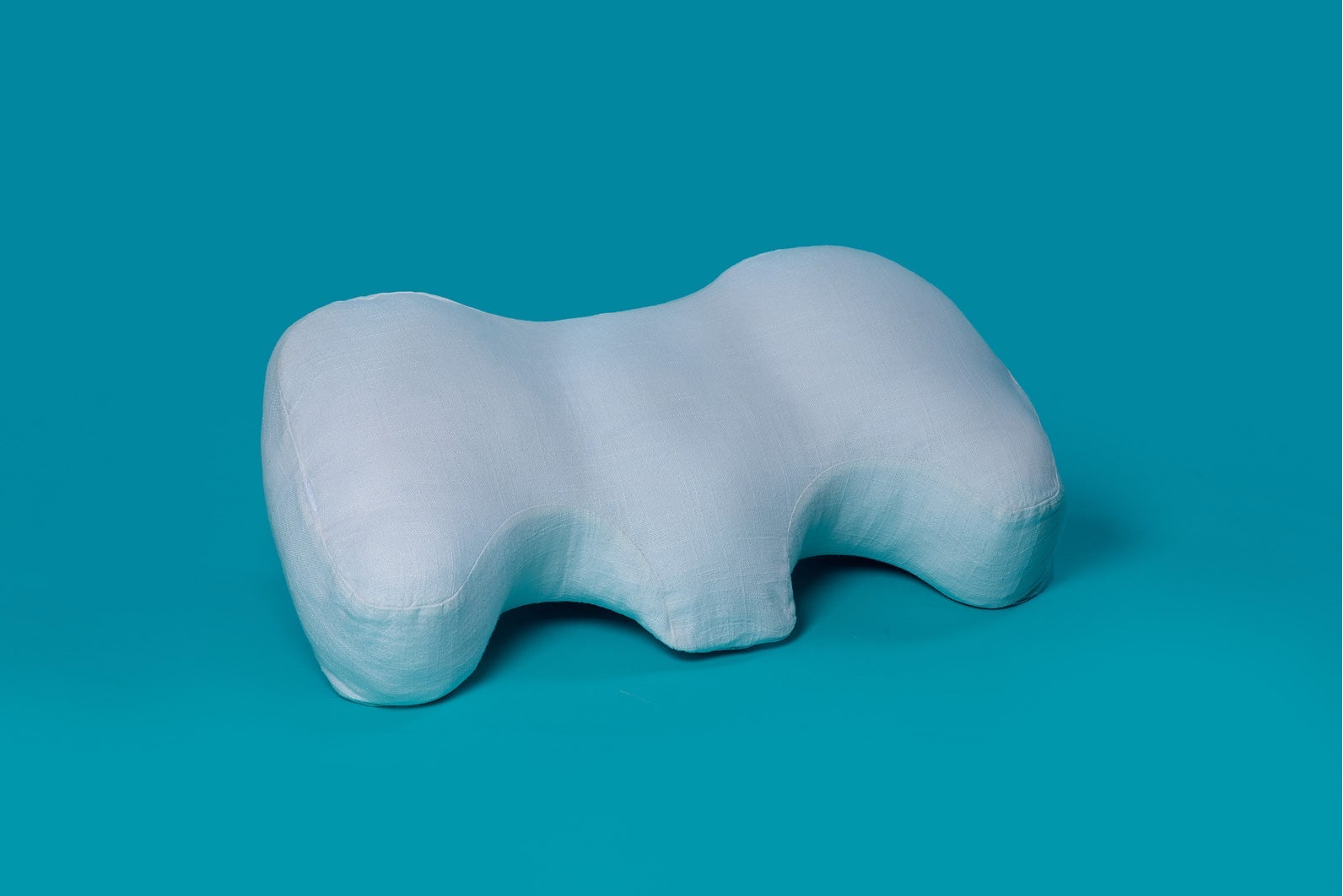
Shape is another important variable. Contoured pillows are often studied because they attempt to provide different support zones for side and back sleeping. The evidence review found moderate support for a contoured design with higher sides and a lower middle section, which may better match different sleep positions and improve comfort or alignment in suitable users.
Still, contour should not be treated as a universal recommendation. A pillow shape that works well for one person may not work well for another if shoulder width, mattress firmness, or dominant sleeping position are different. The more defensible conclusion is that hape helps when it improves positional fit. Because pillow performance can vary by posture, readers who mostly sleep on their side may also find our guide on side sleeping alignment and pillow support useful.
What the evidence suggests about pillow height
Pillow height is one of the most practical design variables, but it is also one of the easiest to overlook. Research on pillow ergonomics has shown that height affects cervical posture, comfort, and muscular loading. The 2021 pillow-parameter review reported moderate evidence for a central unloaded height of roughly 7 to 11 cm, although that should be interpreted as a useful range rather than a one-size-fits-all prescription.
The reason height matters is straightforward: a pillow that is too high can push the head upward and alter cervical alignment, while a pillow that is too low may fail to support the neck. Real-world fit still depends on body frame, shoulder width, sleeping position, and mattress sink, which is why height should always be considered in context rather than in isolation.
What the evidence says about outcomes
Neck pain
This is the most consistently studied outcome. Across the available clinical literature, some supportive pillow types were associated with better neck pain outcomes than less supportive comparators, although the certainty of evidence is limited by study differences and inconsistent classifications.
Waking symptoms and morning discomfort
Waking symptoms, including morning pain and stiffness, appear to respond more consistently to pillow differences than broader sleep-quality measures. This is clinically relevant because many users judge a pillow by how they feel on waking rather than by abstract sleep metrics alone.
Sleep quality
The evidence here is more mixed. Some reviews suggest that better pillow parameters may improve comfort and perceived sleep quality, but the 2021 systematic review found the evidence less consistent for sleep-quality outcomes than for neck pain, waking symptoms, and disability.
Headache-related outcomes
Evidence for cervicogenic headache specifically is limited. Older clinical data reported improvement in waking headache with certain pillow types, but this is not the same as having a large, high-certainty evidence base for pillows as a treatment for cervicogenic headache. That claim still requires a cautious interpretation.
Notable studies worth knowing
One often-cited study found that latex pillows performed well for reducing waking headache and scapular or arm pain compared with participants’ usual pillows, especially in symptomatic sleepers. More recent randomized evidence in patients with cervical spondylosis suggested that an ergonomic latex pillow may improve craniovertebral angle and neck extensor muscle endurance, although the study authors themselves noted that stronger evidence would still be needed before broad recommendations could be made.
These findings are useful because they suggest that pillow design can influence clinically relevant outcomes, but they should not be overstated. Many of the studies in this space remain relatively small, population-specific, or tied to broader rehabilitation contexts rather than pillow use alone.
What remains uncertain
The evidence base still has important limitations:
- many studies are small
- pillow categories are not standardized
- outcome measures differ from study to study
- sleep position is not always controlled consistently
- evidence for cervicogenic headache is limited
- comfort and clinical effectiveness are not always the same thing
For that reason, the literature supports a measured conclusion rather than a sweeping claim. Pillow design appears relevant. Some materials, shapes, and height ranges look more promising than others. But the evidence still supports individualized fit more strongly than it supports one universally best pillow design.
Practical interpretation of the literature
From a practical standpoint, the most defensible takeaways are:
- Support consistency matters. Pillows that retain shape more reliably may perform better than pillows that collapse easily.
- Height matters. Pillow loft can influence cervical posture, comfort, and muscle loading during sleep.
- Shape matters when it improves fit. Contour can be helpful, especially when it matches back or side sleeping needs.
- Pain outcomes are better supported than broad sleep claims. The evidence is stronger for neck pain and waking symptoms than for generalized sleep-quality improvement.
- Headache claims should stay conservative. There is some relevant evidence, but not enough to justify universal treatment-style claims.
For a more detailed explanation of posture-related shoulder loading during sleep, read our article on why side sleepers often experience more shoulder pain.
Final evidence-based takeaway
The literature does not support the idea that one pillow design is best for everyone with neck pain or cervicogenic headache-related symptoms. What it does support is a narrower and more useful conclusion: pillow material, height, contour, and support consistency can influence waking symptoms, neck pain, and comfort, and some structured designs appear to perform better than less supportive alternatives in selected users.
For readers seeking more targeted structured support, it may be reasonable to explore a pillow for cervical neck pain while keeping expectations evidence-based: support and fit matter, but individual response still varies.
FAQ
Does research show that pillow design can affect neck pain?
Yes. Reviews and clinical studies suggest that pillow design can influence neck pain, waking symptoms, disability, and comfort, although the evidence is mixed and not all pillow types perform equally.
Are contoured pillows better than regular pillows?
Not always. Some evidence supports contoured designs for alignment and comfort, but the benefit depends on fit, body type, and sleep posture.
What pillow height seems most supported by the evidence?
One review found moderate evidence for a central unloaded height of around 7 to 11 cm, but the right real-world fit still depends on the sleeper and mattress.
Is there strong evidence for pillows as a treatment for cervicogenic headache?
No. There is some related evidence, including studies involving waking headaches, but the evidence base is much smaller and less definitive than the literature on neck pain.
What matters more: softness or support?
The literature suggests that support consistency, height, and positional fit are more clinically important than softness alone.
Looking for more structured neck support?
If you want a more targeted option informed by support and alignment principles, explore MPillow’s pillow for cervical neck pain
References
-
Pang JCY, Tsang SMH, Fu ACL. The effects of pillow designs on neck pain, waking symptoms, neck disability, sleep quality and spinal alignment in adults: A systematic review and meta-analysis. Clinical Biomechanics, 2021.
-
Radwan A, Borai A, Abdulrahman M, et al. Effect of different pillow designs on promoting sleep comfort, quality, spinal alignment, and reducing waking symptoms: A systematic review. Journal of Tissue Viability, 2021.
-
Gordon SJ, Grimmer-Somers K. Pillow use: the behavior of cervical stiffness, headache and scapular/arm pain. Journal of Pain Research, 2011.
-
Fazli F, Jafari H, Moezy A, et al. The Effect of Ergonomic Latex Pillow on Head and Neck Alignment and Muscle Endurance in Patients With Cervical Spondylosis. Journal of Manipulative and Physiological Therapeutics, 2020.
-
Ren S, Liu Y, Tan J, et al. Effect of pillow height on the biomechanics of the head-neck complex: investigation of cranio-cervical pressure and cervical spine alignment. PeerJ, 2016.