
How to Use a Bolster for Back and Hip Comfort in Pregnancy
Lie on your side with your knees bent and a bolster between them. Your top leg should rest level with your hip, instead of pulling your pelvis forward. Add a small cushion under your bump, and a pillow behind your back if you tend to roll. NHS and ACOG guidance is to sleep on your side in later pregnancy, and either side is fine. A bolster can make that position more comfortable. It does not address the cause of back or pelvic pain. Tell your midwife or doctor about pain that is severe or does not settle.
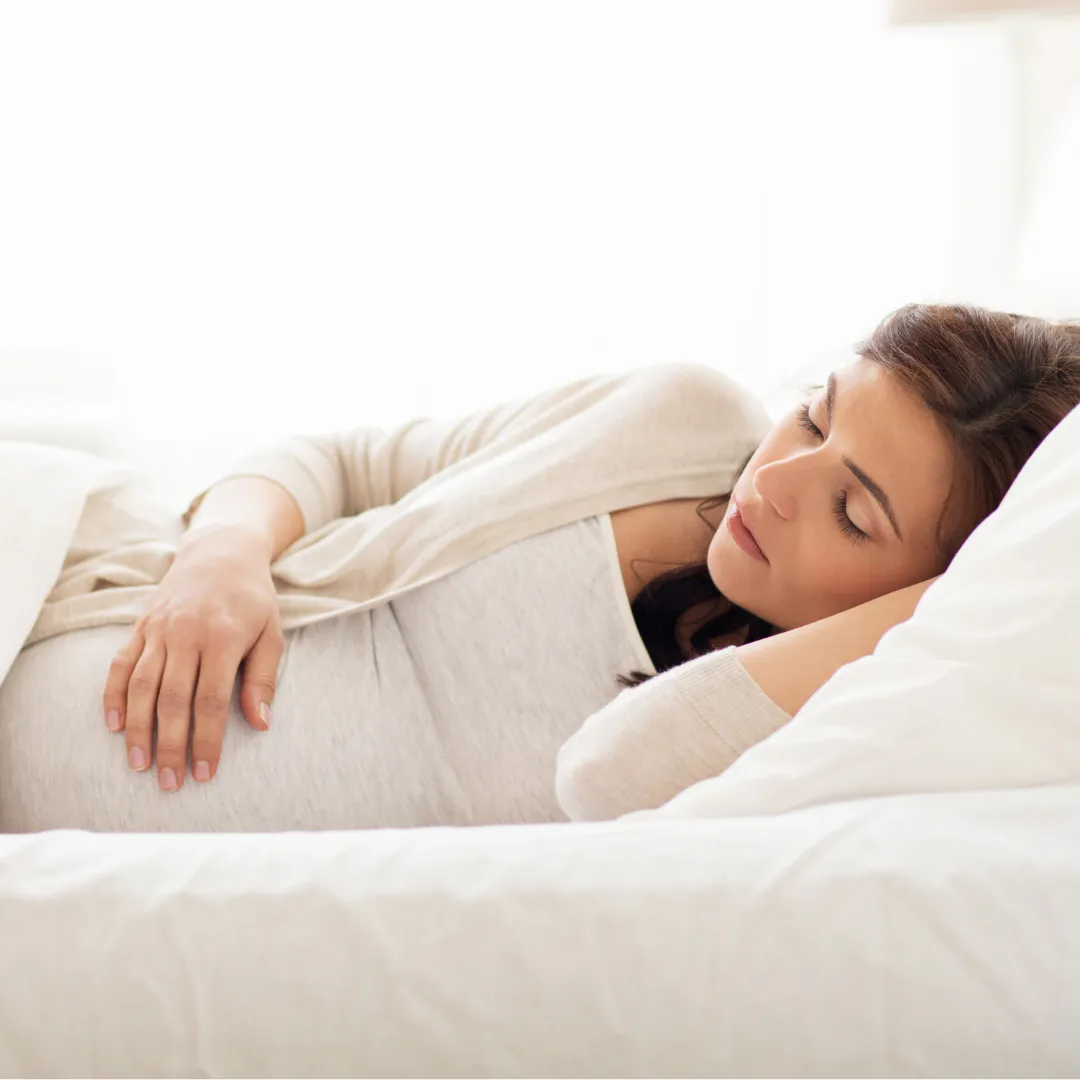
As your bump grows, the positions you used to sleep in stop working. Lying on your back feels heavy, your hips ache on your side, and you may wake several times a night to turn over. This page explains why side sleeping is advised in later pregnancy and how to position a bolster for your back and hips. It also covers what to look for in one. For choosing a bolster in general, see our guide to choosing a bolster.
This is general information. Your midwife or doctor knows your pregnancy, so follow their advice first.
Why is side sleeping advised in later pregnancy?
From the third trimester, health services advise going to sleep on your side. The NHS says that after 28 weeks, going to sleep on your back is linked to a higher risk of stillbirth. It says the safest position to go to sleep in is on your side.
ACOG, the American College of Obstetricians and Gynecologists, gives one reason to avoid lying on your back. In the second and third trimesters, lying on your back may press on a major blood vessel that carries blood to the uterus.
What if you wake up on your back?
Do not panic, ACOG says. The advice is about the position you go to sleep in. If you wake on your back, turn onto your side before going back to sleep (NHS).
Left side or right side?
You may be told the left side is better. ACOG and the NHS both say either side is fine. Some advice, including Singapore's HealthHub, favours the left side. If your midwife or doctor has given you specific advice, follow it.
How do you position a bolster for back and hip comfort?
Use the bolster to support your top leg and keep your hips level, then add small cushions where you need them. ACOG suggests a similar set-up: a pillow between the knees and another under the belly.
Step by step:
- Lie on your side with your knees bent. ACOG suggests bending one or both knees.
- Place the bolster between your knees, and down to your ankles if it is long enough. This stops your top leg sliding forward and twisting your pelvis.
- Support your bump. A small pillow or folded towel under the bump can take some of its weight.
- Hug the top end of the bolster, or a pillow in front of you, so your top arm and shoulder have somewhere to rest.
- Put a pillow behind your back if you keep rolling over. It gives you something to lean into and keeps you on your side.
- Keep your head on its own pillow, high enough to keep your neck level with your spine.
Turning over in bed
Turning over can be the most uncomfortable part of the night, especially with pelvic pain. An NHS leaflet from Milton Keynes University Hospital suggests keeping your knees together as you roll. Bring the bolster with you, so it stays between your knees.
For other positions and common mistakes, see how to use a bolster in each position.
Can a bolster help with pelvic girdle pain?
A bolster may make lying on your side more comfortable, but it does not address the cause of the pain. The NHS lists putting a pillow between your legs in bed as one self-help step for pelvic pain in pregnancy. A bolster can do that job.
If you have pain in your pelvis, tell your midwife or doctor. The NHS says you may be referred to a physiotherapy service that specialises in pelvic joint problems in pregnancy.
What should you look for in a pregnancy bolster?
Look for a bolster that reaches from your chest to your knees and will not flatten between them. It should also be easy to wash properly. You do not need a product labelled for pregnancy. Ordinary pillows, a bolster or a body pillow can all be used to support side sleeping.
| Option | What it supports | Bed space | Washing | After pregnancy |
|---|---|---|---|---|
| Regular pillows | Knees, bump or back, one at a time | Small, but they drift apart overnight | Usually easy | Back to everyday use |
| Straight bolster | Knees and top arm, together | Moderate | Depends on the build | Side sleeping |
| Long body pillow | Front, knees and ankles | Large | Often bulky to wash whole | Side sleeping, if you have space |
| C- or U-shaped pregnancy pillow | Front, back, knees and bump at once | Very large | Often too bulky for a home machine | Bulky to keep once you no longer need it |
Four things to check:
- Length for your height. The bolster should reach between your knees while you hug its top end.
- Firmness you can change. Your body changes month by month, so a bolster you can soften or firm up stays useful for longer.
- Washability. In Singapore's humid climate, you will want to wash the whole bolster, not just its case.
- Space. In a shared bed, a straight bolster leaves more room than a U-shaped pillow.
For a closer look at the differences, see our comparison of bolsters, body pillows and pillows.
Is the Mbolster suitable during pregnancy?
The Mbolster can be used in the way this page describes: hugged, and placed between the knees. It is a side-sleep bolster sized by height for the whole household, not a pregnancy pillow.
Some of its features are useful at this stage:
- Adjustable firmness: its modular fillings mean the firmness can be changed rather than fixed.
- Washable: the fillings come out, so the bolster can go in the washing machine.
- Sized by height, not pregnancy stage: S up to 1.50 m, M from 1.50 m to 1.80 m, and L above 1.80 m.
- Useful afterwards: it is made for everyday side sleeping, so it does not become redundant after the birth.
The Mbolster will not wrap around your back or bump the way a U-shaped pregnancy pillow does. You may still want a small cushion for your bump and a pillow behind your back.
When should you call your midwife or doctor about back or hip pain?
Back pain is common in pregnancy, but some pain needs checking. The NHS says to contact your midwife or doctor urgently if you have back pain and:
- you are in your second or third trimester, as this could be a sign of early labour
- you have a fever
- you have bleeding from your vagina
- you have pain when you pee
- you have pain under your ribs
With back pain, loss of feeling is an emergency sign, the NHS says. Go to A&E or call 995 for an ambulance if you lose feeling in one or both legs, your bottom or genitals.
Also tell your midwife or doctor if back or hip pain:
- is severe, or keeps getting worse
- does not settle with rest and changes of position
- stops you sleeping, walking or getting through your day
The NHS says to talk to your midwife or GP if backache is very painful. They may refer you to a physiotherapist who specialises in pregnancy.
Frequently asked questions
Which side should I sleep on when I am pregnant?
ACOG says either side is fine. Some guidance favours the left side, so ask your midwife or doctor if you have been given specific advice for your pregnancy.
What should I do if I wake up on my back?
Turn onto your side and go back to sleep. The NHS advice is about the position you go to sleep in, from 28 weeks onwards.
When should I start using a bolster in pregnancy?
Start whenever it makes you more comfortable. The NHS advises going to sleep on your side from 28 weeks, so it helps to have your support ready before then.
Can I use an ordinary bolster instead of a pregnancy pillow?
Yes. You do not need a product labelled for pregnancy. A bolster between your knees, with a small cushion under your bump, supports side sleeping in the same way.
Can I keep using my bolster after the baby arrives?
Yes, for your own side sleeping. Never put a bolster or pillow in your baby's cot. The American Academy of Pediatrics says a baby's sleep space should hold only a firm, flat mattress and fitted sheet for the first year.
Next step
Want a bolster you can adjust now and keep using after the birth? Enter your height in the Mbolster configurator to see which size suits you. Check any sleep-position questions with your midwife or doctor first.